Sundara Kanda‚ the fifth and central part of the Ramayana‚ is widely considered its heart. It transforms despondency into hope‚ narrating a story of single-minded pursuit. This beautiful chapter‚ “Sundaram‚” begins after the despair felt at the end of Kishkindha Kanda.

The Fifth Book of Ramayana
The Sundara Kanda‚ unequivocally designated as the fifth kanda‚ or book‚ within the revered Hindu epic‚ Valmiki’s Ramayana‚ serves as a crucial narrative bridge. Positioned directly after the Kishkindha Kanda‚ which concludes with a mood of profound despondency concerning Sita’s abduction‚ this segment initiates the turning tide towards hope. It is often referred to simply as “Book Five — Sundara Kanda‚” explicitly marking its sequential place in the grand narrative. This particular book is renowned for its detailed descriptions‚ particularly of the “wonderful island of Lanka‚” the formidable stronghold of the demon king Ravana. The narrative within this fifth book focuses intensely on the initial efforts to locate Sita Devi‚ providing the foundational intelligence necessary for the forthcoming war. Even in its various digital forms‚ such as UTF versions that occasionally note proofreading requirements‚ its significance as the fifth book remains constant. The Sundara Kanda sets the intricate scene for the rescue mission‚ illuminating the geography and challenges of Ravana’s kingdom. Its role as the fifth installment is vital for the epic’s progression‚ meticulously detailing the reconnaissance before the decisive conflict.

The Heart of Valmiki’s Ramayana
Sundara Kanda is universally acknowledged as the very heart of Valmiki’s Ramayana‚ a designation that goes beyond its mere placement as the fifth book. This profound distinction stems from its unparalleled capacity to fundamentally shift the narrative’s emotional landscape. Following the profound despair and stagnation that characterizes the end of the Kishkindha Kanda‚ the Sundara Kanda injects a vital surge of optimism and hope. It is within these chapters that the seemingly impossible quest to locate Sita‚ abducted by Ravana‚ begins to manifest tangible progress‚ primarily through the heroic and unwavering efforts of Hanuman. The term “heart” beautifully encapsulates its spiritual and emotional core‚ representing not just a turning point but the very essence of devotion‚ courage‚ and relentless perseverance in the face of insurmountable obstacles. Its vivid and inspiring descriptions serve as a powerful beacon‚ rekindling faith and demonstrating that even in the darkest moments‚ a path to resolution can be found. It truly embodies the resilient spirit and core teachings of the Ramayana‚ making it an indispensable and central pillar of the entire epic’s enduring legacy and profound impact.
Journey from Despondency to Hope
The Sundara Kanda marks a pivotal emotional shift within the grand narrative of the Ramayana‚ transitioning from a pervasive mood of despondency to one of profound optimism and renewed hope. At the conclusion of the Kishkindha Kanda‚ the atmosphere was heavy with despair‚ affecting not only the Vanaras‚ but also Rama and Sita‚ who felt increasingly isolated and helpless in their predicament. The seemingly insurmountable task of locating Sita in the distant island of Lanka had cast a long shadow of hopelessness over everyone involved.
However‚ the commencement of the Sundara Kanda dramatically alters this grim outlook. It embarks on a singular journey of purpose‚ primarily through the indomitable spirit and actions of Hanuman. His unwavering resolve and epic leap across the ocean symbolize the courageous pursuit necessary to overcome the most daunting obstacles. This heroic endeavor breathes new life into the mission‚ transforming the collective mood from one of helplessness and dejection into a vibrant sense of possibility and impending success. Hanuman’s adventures become the beacon that guides the narrative towards a future filled with renewed determination and the ultimate promise of reunion.

Authorship and Traditional Context
Valmiki Maharshi is traditionally credited as the author of the Ramayana‚ encompassing the Sundara Kanda. Notable translational contributions‚ such as those by Ranganatha Sharma N Vidwan‚ help disseminate this epic work‚ making its profound wisdom accessible.
Valmiki Maharshi as the Author
Valmiki Maharshi‚ deeply revered as the Adi Kavi or the first poet‚ holds the venerable position as the traditional author of the ancient Hindu epic‚ the Ramayana. It is his profound literary genius that is credited with composing the Sundara Kanda‚ a pivotal and cherished book within this grand narrative. His original Sanskrit composition‚ often cited as the “Valmiki Ramayana‚” provides the authoritative foundation for all subsequent retellings and studies of this sacred text.
The intricate details and spiritual resonance found throughout the Sundara Kanda are a testament to Valmiki’s unparalleled vision and poetic skill. His authorship ensures the integrity and authenticity of the events described‚ particularly Hanuman’s extraordinary adventures. The availability of “Valmiki Ramayana ― Sundara Kanda” in formats like DJVU and PDF‚ alongside scholarly works such as the “Baroda Critical Edition” mentioned in relation to the Sundara Kandam‚ highlights ongoing efforts to preserve and disseminate his invaluable literary contribution. Valmiki Maharshi’s name is inextricably linked to the timeless wisdom and devotional power embedded within the Sundara Kanda.
Translational Contributions (e.g.‚ Ranganatha Sharma)
The profound narrative of the Sundara Kanda has been made widely accessible through the dedicated efforts of numerous scholars and translators. Prominent among these is Ranganatha Sharma N Vidwan‚ who has contributed significantly to making the original work comprehensible to a broader readership‚ as indicated by his role as a translator. These translational endeavors are crucial for bridging linguistic gaps and ensuring the epic’s spiritual and literary richness is appreciated by diverse audiences globally.
The availability of the Sundara Kanda in various languages underscores its universal appeal. Beyond the foundational Sanskrit text‚ readers can access versions such as “SundarakandaOfTulsiRamayanaTr.BySadhuRamHindiBhawanLahore‚” which highlights its presence in Hindi‚ and “sundarakanda-by-smt-krishna-kota-in-english‚” along with the “Sundarakanda English Full Book‚” catering to English-speaking audiences. Additionally‚ resources like “Sundarakanda Parayanam by MS Rama Rao Telugu PDF” demonstrate its accessibility in Telugu. These diverse translations‚ often available in digital formats like PDF‚ ensure that the epic’s powerful messages‚ character portrayals‚ and detailed descriptions continue to inspire and inform devotees and scholars across different cultures and linguistic backgrounds.

Narrative Highlights and Character Focus
This section illuminates Hanuman’s exemplary qualities and adventures‚ detailing his search for Sita in Lanka. It also features vivid descriptions of Lanka’s wonders‚ highlights specific Sargas like Sagaralanghanam‚ and elaborates on Sri Raghava’s glorious physical and psychological traits.

Hanuman’s Exemplary Qualities and Adventures
The Sundara Kanda vividly portrays Hanuman‚ often fondly called Sundara‚ as the epitome of devotion‚ courage‚ and unparalleled strength. This book focuses extensively on his extraordinary adventures‚ particularly his perilous journey to Lanka in search of Sita Devi‚ abducted by Ravana. Hanuman’s epic feat of crossing the vast ocean‚ known as Sagaralanghanam‚ is a narrative highlight‚ showcasing his immense power and unwavering resolve.
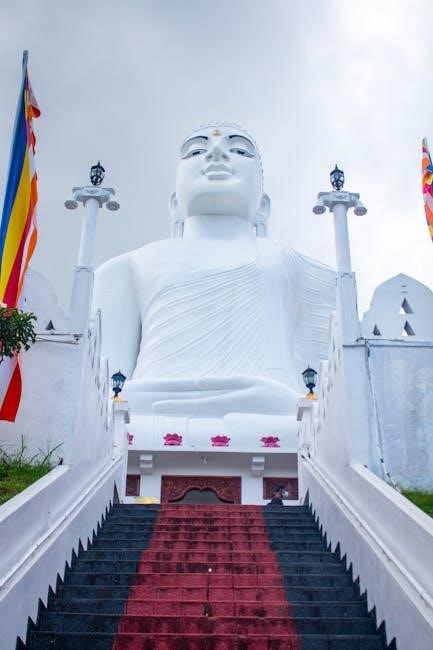
Upon successfully traversing challenging waters‚ the mighty Hanuman entered the island city of Lanka at night‚ skillfully navigating its defenses. His single-minded pursuit of Sita is a central theme‚ demonstrating absolute loyalty to Rama; The narrative details his observations of Lanka and strategic movements within enemy territory. Each adventure‚ from his magnificent leap across the sea to his discreet entry and exploration of Ravana’s formidable kingdom‚ underscores his exemplary qualities. He faces numerous obstacles‚ displaying remarkable intelligence‚ resilience‚ and unwavering commitment to his divine mission. These tales solidify his status as a revered hero‚ inspiring readers with his faith and incredible valor throughout this pivotal section.

Description of Lanka and its Wonders
The Sundara Kanda dedicates significant passages to describing the magnificent island of Lanka‚ the formidable capital of the demon king Ravana. Hanuman’s arrival provides the initial and most vivid accounts of this wondrous city. Having successfully crossed the formidable ocean‚ Hanuman beholds Lanka standing majestically on the peak of Trikuta mountain. The text refers to it as a “wonderful island‚” emphasizing its unique geographical setting and impressive architecture. Descriptions highlight its opulence‚ formidable defenses‚ and the grandeur befitting a powerful kingdom. The narrative elaborates on the beauty of its palaces‚ gardens‚ and the overall splendor that marks Ravana’s realm. Hanuman’s observations provide a detailed panorama of the city‚ from its strategic location to the intricate details of its structures and vibrant atmosphere. This detailed portrayal helps readers visualize the setting of Sita’s captivity and Hanuman’s arduous search. The city‚ despite being the abode of a demon‚ is depicted with an awe-inspiring beauty‚ making it a truly wondrous sight; The sheer scale and magnificence of Lanka are presented as a testament to Ravana’s power and the advanced civilization he commanded‚ forming a crucial backdrop to the epic’s events.
Sarga-wise Content: Sagaralanghanam and Nishagamapratiksha
The Sundara Kanda is meticulously structured into various sargas‚ each detailing specific events in Hanuman’s epic journey. The first sarga‚ known as “Sagaralanghanam‚” vividly narrates Hanuman’s monumental feat of leaping across the vast‚ treacherous ocean to reach Lanka. This initial chapter encapsulates his incredible power and unwavering determination as he undertakes the formidable task‚ a pivotal moment marking his courageous departure from the mainland towards enemy territory. It sets the stage for his heroic and perilous mission to locate Sita Devi‚ demonstrating unparalleled commitment to Lord Rama.
Following this breathtaking aerial journey‚ the second sarga‚ titled “Nishagamapratiksha‚” describes Hanuman’s strategic and cautious entry into Lanka. Having successfully traversed the challenging waters‚ the mighty Hanuman sights the formidable city perched majestically on the Trikuta mountain. This sarga specifically highlights his timely arrival and stealthy penetration of the city under the protective veil of night. It intricately details his initial strategy and keen observations as he subtly navigates Ravana’s impenetrable capital‚ patiently awaiting the most opportune moment to commence his diligent search. This careful‚ calculated approach underscores his exceptional intelligence and strategic thinking.
Descriptions of Sri Raghava’s Traits
The Sundara Kanda‚ while predominantly narrating Hanuman’s adventures‚ subtly yet powerfully illuminates the glorious physical and psychological traits of Sri Raghava. Throughout its verses‚ even in the absence of Rama’s direct presence‚ his noble character and virtues are constantly recalled and revered‚ particularly by Sita and Hanuman. The 31st Sarga‚ for instance‚ delves into a detailed account of the esteemed Ikshvaku Vamsam‚ the illustrious lineage from which Sri Rama descends. This emphasis on his royal ancestry naturally underscores his inherent regal qualities‚ his commitment to dharma‚ and his profound sense of duty.
Hanuman’s unwavering devotion and Sita’s poignant recollections serve as conduits for describing Rama’s unparalleled beauty‚ his unwavering courage‚ and his profound compassion. These narrative elements paint a vivid picture of a righteous king‚ whose principles and steadfastness are the very bedrock of his personality. His physical attributes are often described as divine and captivating‚ reflecting his inner purity and strength. The Kanda frequently references his heroic deeds and ethical conduct‚ reinforcing his image as an ideal man and a just ruler‚ whose absence is deeply felt but whose essence inspires hope and resilience.

Significance and Ritualistic Practice
Sundara Kanda is deeply revered‚ and its ritualistic recitation‚ known as ‘parayanam‚’ is widely practiced. This sacred text is believed to help in fulfilling desires and overcoming all kinds of obstacles‚ including harmful astrological influences‚ bringing solace.
Beliefs for Fulfillment of Desires
The Sundara Kanda holds a paramount position in Hindu spiritual practices‚ particularly regarding the fulfillment of personal aspirations and deeply cherished wishes. Devotees across various traditions undertake the ritualistic reading‚ known as ‘parayanam‚’ of this sacred book with immense faith‚ believing in its potent ability to manifest their heartfelt desires. This practice is not merely a literary engagement but a profound act of devotion and spiritual petition‚ seeking divine intervention. Many consider the Sundara Kanda to be an auspicious conduit for divine blessings‚ asserting that its regular recitation can attract positive energies and align circumstances in favor of the practitioner’s goals; The narrative itself‚ detailing Hanuman’s unwavering resolve and ultimate success in locating Sita despite formidable challenges‚ serves as a powerful inspiration. This epic segment instills hope and perseverance‚ reinforcing the conviction that persistent effort combined with spiritual devotion can overcome seemingly insurmountable odds‚ leading to the realization of one’s deepest yearnings. The profound impact of Hanuman’s journey is thus believed to resonate with the devotee’s own struggles and aspirations‚ guiding them towards successful outcomes through divine grace and personal fortitude.
Overcoming Obstacles through Parayanam
The practice of ‘parayanam‚’ or the dedicated recitation of the Sundara Kanda‚ is revered as a powerful spiritual discipline specifically aimed at surmounting life’s myriad challenges. Devotees regularly engage in this sacred study‚ believing it to be a potent remedy for various adversities. The intended benefit of such a profound engagement with the text is explicitly linked to overcoming obstacles of all kinds‚ whether they are personal‚ professional‚ or spiritual. This includes mitigating the effects of harmful astrological transits‚ often referred to as ‘graha doshas‚’ which are believed to cause significant disruptions and difficulties in an individual’s life. By invoking the divine energy and the heroic exploits of Hanuman described within the Sundara Kanda‚ practitioners seek divine protection and strength to navigate through tough times. The narrative of Hanuman’s successful‚ obstacle-ridden journey to Lanka serves as a symbolic blueprint for confronting and conquering one’s own hindrances. This ritualistic reading is thus a source of immense fortitude‚ providing solace and a clear path forward when faced with seemingly insurmountable barriers‚ transforming despair into resolution and ultimately triumph.

Sundara Kanda in PDF Format
The Sundara Kanda is widely accessible in PDF format‚ offering free downloads for various versions. These digital copies‚ often in the public domain‚ facilitate easy reading and preservation. Multiple language versions‚ including English‚ Telugu‚ and Hindi‚ ensure its reach to a global audience.
Availability for Free Download
The Sundara Kanda is extensively available for free download across numerous online platforms‚ making this revered text accessible globally. Devotees and enthusiasts readily find editions in PDF format‚ ideal for reading on diverse devices or printing for personal study. For instance‚ comprehensive versions like the “Sundarakanda English Full Book” are freely downloadable‚ often presented as interactive flip PDFs. Many interpretations‚ such as “Sundara Kanda of Hanuman‚” can be downloaded as PDF files or read online at no cost‚ facilitating engagement with its profound narrative and spiritual lessons for seekers.
Digital libraries and archival projects frequently host these sacred texts‚ ensuring their preservation and widespread distribution. Resources like the “Sundarakanda Parayanam by MS Rama Rao Telugu PDF” showcase the availability of regional language translations alongside English versions. Whether seeking the complete Valmiki Ramayana’s Sundara Kanda or a concise “Sankshipta Sundara Kandam‚” numerous online repositories offer these invaluable spiritual works at no charge. This widespread availability‚ often a result of efforts to digitize and share cultural heritage‚ truly underscores the community’s commitment to making the Sundara Kanda freely accessible to all.
Public Domain and Digital Preservation
The widespread availability of Sundara Kanda in PDF format is significantly due to its public domain status and dedicated digital preservation efforts. Many ancient versions‚ with expired copyrights‚ are now freely accessible. Initiatives by organizations like Google and the Internet Archive have meticulously scanned and digitized generations-old library books‚ including numerous Sundara Kanda editions. These projects convert fragile physical copies into durable digital files like PDFs and DJVU‚ ensuring their survival and broad accessibility for future generations. This digital transformation makes scholarly and devotional texts‚ some published as early as 1913 or later editions from 1979‚ freely downloadable without copyright restrictions.
The process involves optical character recognition (OCR) and careful cataloging‚ making these historical documents searchable and easily navigable online. Such digital preservation safeguards the cultural and spiritual heritage embedded in the Sundara Kanda‚ preventing loss due to physical degradation. For example‚ a 1913 publication by Dodda bele Narayana Shastry is now digitally preserved. This commitment to public access ensures Valmiki Maharshi’s profound work remains an enduring global resource for study and devotion‚ fostering widespread understanding and appreciation.
Different Language Versions (English‚ Telugu‚ Hindi)
The digital availability of Sundara Kanda in PDF format caters to a diverse global audience‚ with prominent versions accessible in English‚ Telugu‚ and Hindi. English translations‚ such as the “Sundarakanda English Full Book” published by Lakshmi Kartheeka‚ are easily found for free download‚ often presented as interactive flip PDFs‚ making the epic accessible to an international readership. These renditions are crucial for non-native speakers to immerse themselves in Hanuman’s exemplary qualities and the narrative’s spiritual depth.
For Hindi speakers‚ versions like the “Sundara Kanda of Tulsi Ramayana‚” translated by Sadhu Ram Hindi Bhawan Lahore‚ are digitized and widely available‚ serving a significant devotional community. Telugu-speaking devotees can readily access popular versions like the “Sundarakanda Parayanam by MS Rama Rao Telugu PDF‚” frequently used for ritualistic recitation (‘parayanam’). This multi-lingual accessibility through PDF ensures that the cultural and spiritual essence of Sundara Kanda is preserved and propagated across different linguistic communities‚ facilitating personal study and collective engagement with this revered text‚ enhancing its global reach.